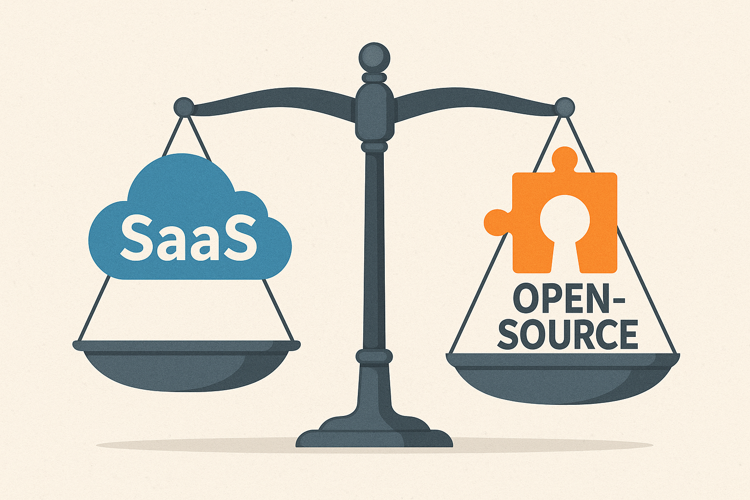
SaaS vs Open-Source: When It Makes Sense to Build Your Own Algotrading Engine

“Build your own stack or pay for a ready-made SaaS?”
A year ago, I switched from TSLab (60k/year) to my own stack (Python + Backtrader + Docker).
I thought I’d save money. Turns out — it’s not that simple.
Over the past year, I calculated the real total cost of ownership (TCO) for both approaches. I factored in not just money, but time, risks, and hidden expenses.
Here’s what I learned.
The Illusion of Free Open-Source
Myth: Open-source is free. Python, Backtrader, Docker — all free.
Reality: The software is free. Time, infrastructure, support — are not.
My Story
2024: TSLab: 60k/year + MOEX AlgoPack: 55k/year + VPS: 12k/year = 127k/year total.
I thought: “Why pay? I’ll build on open-source. Save 115k/year.”
2025 (reality): Built a stack: Python + Backtrader + TimescaleDB + Docker. Infrastructure: 54k/year. Time: 40 hours setup + 120 hours maintenance.
First year total: 534k (counting my time at developer rate).
TSLab + AlgoPack: 127k/year. I lost 407,000 in the first year.
TCO: Total Cost of Ownership
TCO isn’t just the license fee. It’s CapEx, OpEx, and hidden costs.
TCO for SaaS (TSLab): First year 147k, subsequent years 127k.
TCO for open-source (Python stack): First year 644k, second year 474k.
Open-source is 4.4x more expensive in the first year.
When SaaS Is Cheaper
- You’re not a programmer — learning Python, Docker, SQL costs 200+ hours
- Simple strategies — SaaS handles them out of the box
- Testing an idea — 5 hours in TSLab vs 40 hours in open-source
- Capital <5M rubles — platform cost exceeds capital
When Open-Source Is Cheaper
- You’re a programmer — setup and maintenance times halve
- Complex strategies (ML, arbitrage) — SaaS can’t handle them
- Capital >10M rubles — flexibility yields additional returns
- Scale (5+ users) — SaaS licenses multiply, open-source doesn’t
- HFT — open-source with direct WebSocket/FIX API: 1-5ms vs TSLab’s 10-30ms
Platform Comparison
SaaS for the Russian Market
| Platform | Cost (rub/year) | Pros | Cons |
|---|---|---|---|
| TSLab | 60,000 | Visual builder, backtester, support | Vendor lock-in, no ML |
| MetaTrader 5 | 0 | Free, simple | Limited functionality |
| TradingView | 15-60k | Charts, Pine Script | No full backtesting |
Open-Source Frameworks
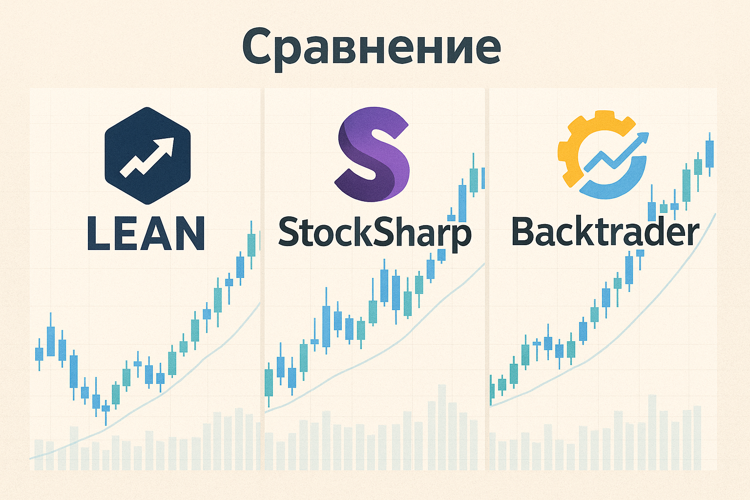
| Framework | Language | Pros | Cons |
|---|---|---|---|
| Backtrader | Python | Simple, flexible | Slow, unsupported |
| LEAN | C#/Python | Professional, active development | Complex setup |
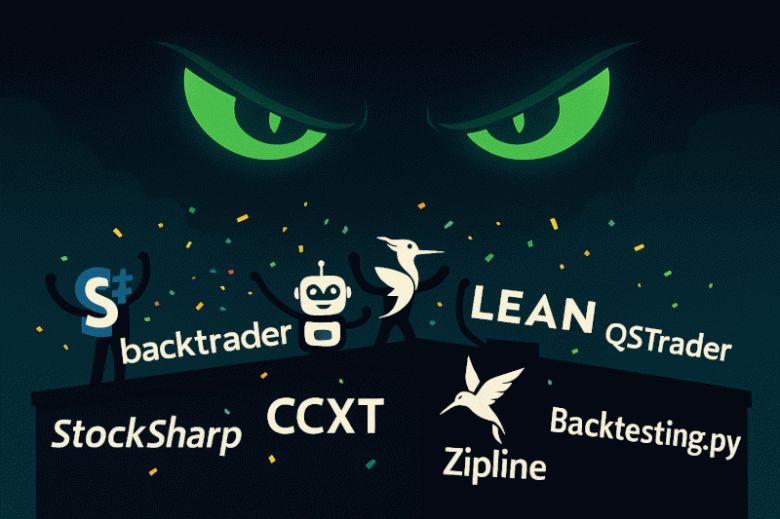
| StockSharp | C# | 90+ exchanges, GUI Designer | Steep learning curve |
Checklist: SaaS or Open-Source?
- Are you a programmer? Yes -> Open-source. No -> SaaS.
- Simple strategy? Yes -> SaaS. No (ML, arbitrage) -> Open-source.
- Capital? <5M -> SaaS. >10M -> Open-source.
- Time is money? Yes -> SaaS. No (hobby) -> Open-source.
- Vendor lock-in critical? Yes -> Open-source. No -> SaaS.
- HFT? Yes -> Open-source. No -> SaaS.
My Opinion
SaaS (TSLab) — if you’re not a programmer, strategy is simple, capital <5M, time costs more than money.
Open-source — if you’re a programmer, strategy is complex, capital >10M, you need full independence.
Hybrid approach — best of both worlds.
My personal recommendation: If you’re a beginner, start with SaaS. Verify that algotrading is for you. After 6-12 months, when you hit platform boundaries, switch to open-source.
Calculate TCO honestly. Factor in time. If time is money, SaaS is almost always more cost-effective.
Useful links:
Share this article:
Related Posts














Discussion
Join the discussion in our Telegram chat!