Should You Start Algo Trading with Builders? An Honest Answer After a Year of Experiments
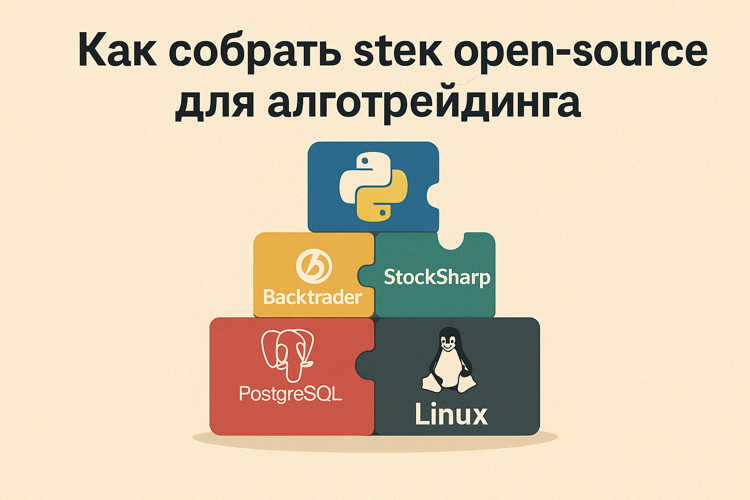
A year ago a reader wrote me: “I want to start algo trading. Where to begin — TSLab or straight to Python?”
I answered: “Depends on your goals.”
He wrote: “I want to trade with robots. I can’t program. But I’m willing to learn if it gives advantages.”
A classic beginner request. And a classic choice paralysis.
Today, after a year of testing five builders and transitioning to code, I have a clear answer.
Three Paths into Algo Trading
There are three ways to start:
Path 1: Visual Builders
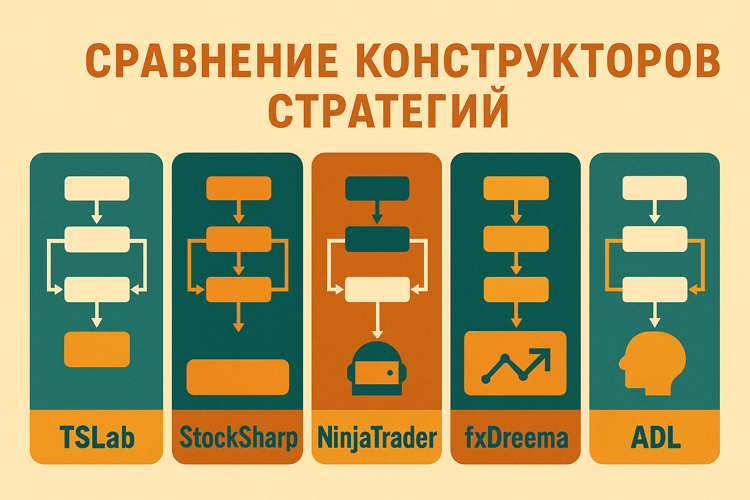
Assemble a strategy from blocks. No code. TSLab, StockSharp Designer, NinjaTrader Strategy Builder.
Pros:
- Quick start (first strategy in an hour)
- No programming knowledge needed
- Visual clarity (see connections between blocks)
Cons:
- Platform limitations
- Vendor lock-in
- License fees (TSLab — 60 thousand rubles per year)
Path 2: Straight to Programming
Learn Python/C#, write code from scratch. Backtrader, LEAN, custom scripts.
Pros:
- Full control
- Free
- Platform independence
Cons:
- Steep learning curve (3-6 months to first robot)
- Need motivation to learn code
Path 3: Hybrid (Builder → Code)
Start with a builder, then transition to programming.
Pros:
- Understand algorithm logic without distraction by syntax
- Soft transition (builder teaches algorithmic thinking)
- Can verify ideas quickly before learning code
Cons:
- Spend time on two ecosystems
- Pay for builder even though you’ll eventually move to code
Who Suits Each Path
Path 1 (Builders) — if:
-
You’re a trader with manual trading experience — You have a strategy that works, you want to automate it, you don’t plan to dive into complex logic.
-
You want to quickly test an idea — You need a prototype over the weekend, scalability doesn’t matter, willing to pay for convenience.
-
Programming causes aversion — You tried learning code and it didn’t click, willing to accept limitations for simplicity.
Path 2 (Straight to code) — if:
-
You have basic programming skills — You’re a programmer/analyst/data scientist, know at least one language.
-
You need complex logic — ML strategies, statistical arbitrage, custom indicators, external API integration.
-
You plan to seriously pursue algo trading — This isn’t a month-long hobby, willing to invest 3-6 months in learning.
Path 3 (Hybrid) — if:
-
You’re a beginner in both algo trading AND programming — Don’t know if algo trading is for you, want to understand logic without syntax.
-
You want a smooth entry — Builder gives quick feedback, then easier to transition to code.
-
You have a learning budget — Willing to pay for TSLab/NinjaTrader for the first months, then move to free Python/C#.
Traps of Each Path
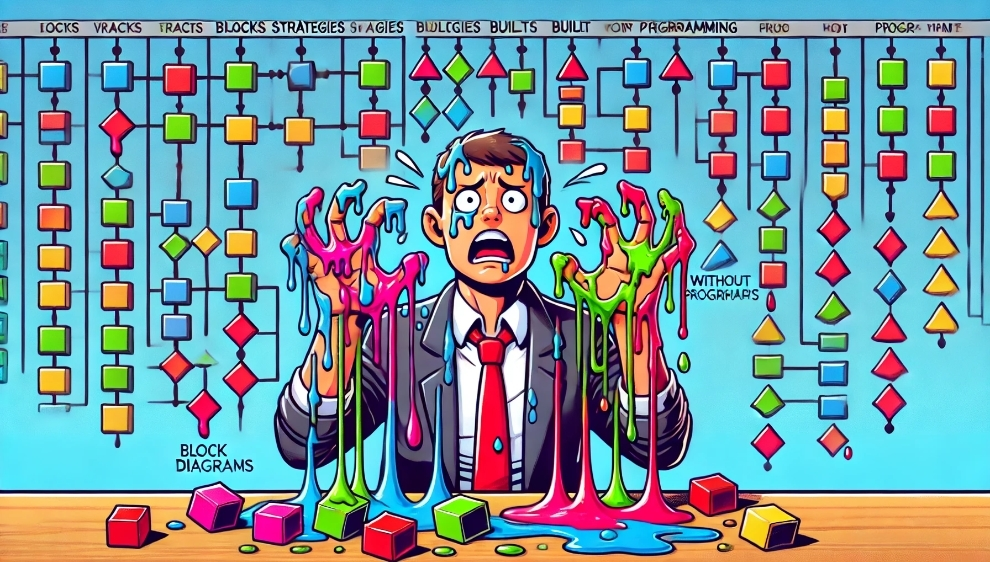
Builder trap: Illusion of simplicity.
You assembled a robot in an hour. It trades. You think: “Algo trading is easy!” Problem: you don’t understand why the robot does what it does. When the strategy stops working, you won’t be able to fix it.
Straight-to-code trap: Information overload.
You downloaded 10 Python courses, subscribed to 20 YouTube channels. Result: analysis paralysis. You study everything but do nothing. Solution: One course. One goal. “Write an SMA cross on Backtrader in a month.”
Hybrid path trap: Getting stuck in the builder.
You started with TSLab. Built 5 strategies. Paying 60 thousand a year. Keep thinking “should learn Python…” A year passes. You’re still in TSLab. Solution: Set a deadline. “3 months in the builder, then Python. Regardless of results.”
Conclusions
Should you start with builders?
Yes — if: You’re a trader with experience wanting to automate a working strategy, the strategy is simple, programming isn’t your thing, willing to pay for convenience.
No — if: You have basic programming skills, the strategy requires complex logic, you plan to seriously pursue algo trading for years.
Hybrid path (builder → code) — if: You’re a beginner in everything, want a smooth entry, willing to spend a month on a builder then learn code.
My personal opinion:
If in doubt — start with a builder. StockSharp Designer is free. fxDreema works in the browser.
Spend a month. Build an SMA cross. Run on demo.
If you liked it — learn Python. If not — you lost nothing.
Better to try and realize it’s not for you than spend a year wondering whether to start.
Useful links:
Platforms for beginners:
- StockSharp Designer (free, 90+ world exchanges)
- fxDreema (browser-based builder for MetaTrader)
- TSLab (paid, 60k/year)
Sources:
Share this article:
Related Posts























Discussion
Join the discussion in our Telegram chat!